
In the vast world of fluid transportation systems, flexible PVC water lines have emerged as a popular choice due to their versatility, cost - effectiveness, and wide range of applications. As a trusted supplier of flexible PVC water lines, I have witnessed firsthand the importance of understanding how these lines respond to water pressure changes. In this blog post, I will delve into the science behind it, the factors that influence this response, and how it impacts the performance and durability of our products.
Understanding Flexible PVC Water Lines
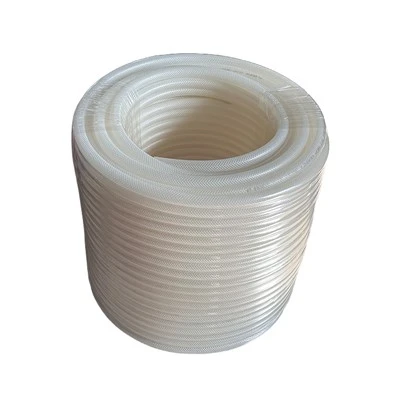
Flexible PVC water lines are made from polyvinyl chloride (PVC), a synthetic plastic polymer. Their flexibility is achieved through the addition of plasticizers, which make the material soft and pliable. These lines are used in various settings, including residential plumbing, agricultural irrigation, and industrial fluid transfer. They come in different types and configurations to suit different needs, such as the Clear Braided PVC Hose Pipe, High Pressure Braided PVC Tubing, Flat PVC Hose, High Pressure Garden Hose, and Single Layer PVC Pipe.
How Flexible PVC Water Lines Respond to Pressure Changes
Expansion and Contraction
When water pressure increases within a flexible PVC water line, the pipe tends to expand. This is because the pressure exerted by the water inside the pipe causes the PVC material to stretch. The amount of expansion depends on the material's elasticity and the magnitude of the pressure increase. Conversely, when the water pressure decreases, the pipe contracts back to its original shape. This expansion - contraction cycle is a normal response of flexible PVC water lines to pressure changes.
However, frequent and extreme expansion - contraction cycles can have a negative impact on the pipe's integrity. Over time, the repeated stretching and shrinking can cause the PVC material to fatigue, leading to cracks and leaks. This is especially true if the pipe is exposed to high - pressure spikes or if it is made from a lower - quality PVC material with poor elasticity.
Resistance to Bursting
One of the most critical aspects of how flexible PVC water lines respond to pressure changes is their resistance to bursting. Our high - quality flexible PVC water lines are designed to withstand a certain maximum pressure, known as the burst pressure. This is the pressure at which the pipe will rupture.


The burst pressure of a flexible PVC water line depends on several factors, including the wall thickness of the pipe, the quality of the PVC material, and the reinforcement (if any). For example, braided PVC hoses like the High Pressure Braided PVC Tubing have a higher burst pressure compared to single - layer PVC pipes because the braided reinforcement adds strength and stability to the pipe, preventing it from bursting even under high - pressure conditions.
Flow Rate and Pressure Drop
Pressure changes also affect the flow rate of water through a flexible PVC water line. According to Bernoulli's principle, an increase in pressure within the pipe can lead to an increase in the flow rate, assuming the pipe diameter remains constant. However, as water flows through the pipe, there is also a pressure drop due to friction between the water and the pipe walls.
The magnitude of the pressure drop depends on the pipe length, diameter, and the roughness of the pipe interior. In longer pipes or pipes with a smaller diameter, the pressure drop will be more significant. This means that even if the initial water pressure is high, the pressure at the end of the pipe may be lower, resulting in a reduced flow rate. Our engineers carefully consider these factors when designing our flexible PVC water lines to ensure optimal flow performance.
Factors Influencing the Response
Temperature
Temperature plays a crucial role in how flexible PVC water lines respond to pressure changes. PVC is a thermoplastic material, which means its properties change with temperature. At higher temperatures, PVC becomes more flexible and less rigid. This can make the pipe more prone to expansion under pressure, potentially increasing the risk of bursting. On the other hand, at lower temperatures, PVC becomes more brittle, reducing its ability to withstand pressure changes without cracking.
Chemical Exposure
Exposure to certain chemicals can also affect the response of flexible PVC water lines to pressure changes. Some chemicals can react with the PVC material, causing it to degrade or become more brittle. For example, prolonged exposure to solvents or strong acids can weaken the pipe structure, making it more likely to fail under pressure. When selecting a flexible PVC water line, it is essential to consider the type of fluid it will carry and its chemical compatibility with the PVC material.
Installation and Bending
Proper installation of flexible PVC water lines is vital for their performance under pressure. Incorrect installation, such as sharp bends or kinks in the pipe, can create stress points within the pipe, reducing its ability to withstand pressure changes. When a pipe is bent too sharply, the inner wall of the bend is compressed, while the outer wall is stretched. This can lead to premature failure, especially if the pipe is subjected to high pressure.
Impact on Performance and Durability
The response of flexible PVC water lines to pressure changes has a direct impact on their performance and durability. A well - designed and properly installed flexible PVC water line can provide reliable service for many years, even under varying pressure conditions. However, if the pipe is not able to handle pressure changes effectively, it can lead to a range of problems, including leaks, bursts, and reduced flow rates.
Leaks and bursts not only cause water wastage but can also lead to damage to the surrounding area. In an industrial setting, a burst pipe can disrupt production processes and result in costly downtime. In a residential setting, water damage from a burst pipe can cause structural damage to a home and require expensive repairs.
Conclusion and Call to Action
In conclusion, understanding how flexible PVC water lines respond to pressure changes is essential for ensuring their optimal performance and durability. As a supplier of high - quality flexible PVC water lines, we take every step to ensure that our products can withstand a wide range of pressure conditions. We use premium - quality PVC materials, advanced manufacturing processes, and appropriate reinforcement techniques to enhance the pressure resistance of our pipes.
Whether you are a homeowner looking for a reliable garden hose or an industrial operator in need of a high - pressure fluid transfer solution, we have the right flexible PVC water line for you. Our Clear Braided PVC Hose Pipe, High Pressure Braided PVC Tubing, Flat PVC Hose, High Pressure Garden Hose, and Single Layer PVC Pipe are all designed to meet the highest standards of quality and performance.
If you are interested in learning more about our flexible PVC water lines or are ready to place an order, please do not hesitate to reach out for a detailed discussion. Our team of experts is always available to provide you with the best product recommendations and assist you with your procurement needs.
References
- Mueller, P. R., & Walsh, P. C. (Eds.). (2007). Urology. Saunders Elsevier.
- Perry, R. H., & Green, D. W. (Eds.). (1997). Perry's Chemical Engineers' Handbook. McGraw - Hill.
- White, F. M. (2003). Fluid Mechanics. McGraw - Hill.