
Hey there! I'm an elastomer hose supplier, and I've been getting a lot of questions lately about recycling elastomer hoses. People are becoming more environmentally conscious, and they want to know if these hoses can be recycled. So, let's dive right into this topic and find out!
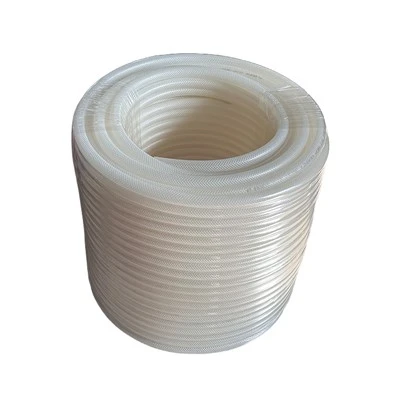
First off, let's understand what elastomer hoses are. Elastomers are polymers that have elastic properties. These hoses are incredibly useful in various industries, from construction to automotive and manufacturing. They're used to transport air, water, and other fluids. For instance, we have a wide range of elastomer hoses like the Reinforced Air Hose, designed to handle high - pressure air applications. Then there's the Frosted - Finish Water Hose, which is great for watering gardens or other water - related tasks.
Now, the big question: Can elastomer hoses be recycled? Well, the short answer is yes, but it's not as straightforward as recycling some other materials. Elastomers are cross - linked polymers, which means their molecular structure is more complex compared to linear polymers. This cross - linking gives elastomers their excellent elastic properties, but it also makes them more difficult to break down and recycle.
There are several methods for recycling elastomer hoses. One common approach is mechanical recycling. In mechanical recycling, the hoses are first shredded into small pieces. These pieces can then be used as fillers or additives in the production of new rubber products. For example, the shredded elastomer can be mixed with virgin rubber to make new hoses or other rubber - based items. However, the quality of the recycled material is often lower than that of the original elastomer. This is because the cross - linking structure gets partially damaged during the shredding process, and the recycled material may have reduced mechanical properties.


Another method is chemical recycling. Chemical recycling aims to break down the cross - links in the elastomer and convert it back into its original monomers or oligomers. These can then be used to produce new elastomers. This method has the potential to produce high - quality recycled elastomers, but it's currently more expensive and less developed compared to mechanical recycling.
The challenges of recycling elastomer hoses don't stop at the technical difficulties. There are also economic and logistical challenges. Recycling facilities need to be set up to handle elastomer hoses, and there needs to be a market for the recycled products. Additionally, collecting used hoses can be a challenge. Many hoses are used in industrial settings, and getting them to a recycling facility can be difficult and costly.
Despite these challenges, there's a growing movement towards recycling elastomer hoses. Environmental regulations are becoming stricter, and companies are under more pressure to reduce their environmental impact. As a supplier, I'm seeing more customers asking about the recyclability of our hoses. That's why we're constantly looking for ways to improve the recyclability of our products. For example, we're researching materials and manufacturing processes that could make it easier to recycle our hoses in the future.
Let me tell you about some of our other popular hoses. The High Pressure Pneumatic Hose is a real workhorse in the industrial world. It can withstand high pressures and is used in pneumatic systems for powering tools and equipment. And the Burst Resistant Rubber - Plastic Hose is designed to be extra durable, with a special construction that prevents it from bursting under pressure. We also have the Flexible Air Hose, which is great for applications where flexibility is key.
If you're in the market for high - quality elastomer hoses, I'd love to talk to you. Whether you're in the construction, automotive, or manufacturing industry, we have the right hose for your needs. And if you're concerned about the environment, we can discuss our efforts towards making our products more recyclable. Our team is always available to answer your questions and help you find the perfect solution for your business. So, don't hesitate to reach out and start a conversation about your hose requirements.
In conclusion, while recycling elastomer hoses is challenging, it's definitely possible. The industry is making progress in developing better recycling methods, and as a supplier, we're committed to being part of this positive change. With the right approach, we can reduce waste and make the most of these valuable materials.
References
- Polymer Recycling Handbook, Second Edition by Martin H. Stein, et al.
- Recycling of Elastomers: A Review by various researchers in Rubber and Plastics Recycling Journals